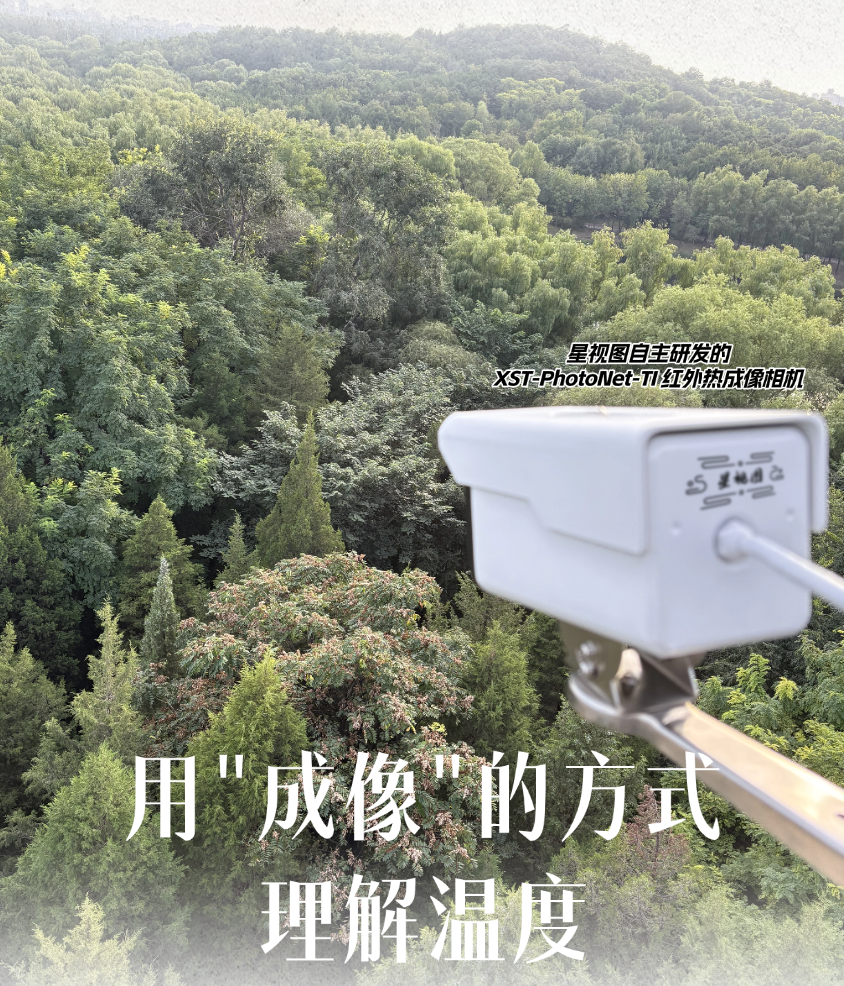
In Ecological and Environmental Monitoring.Temperature is never a single point variable.
Whether it is the vegetation canopy, the ground surface, the understory, or the urban green space, the differences in temperature between different locations are often of greater interest than the “average temperature” itself.
This is the core meaning of the existence of thermal infrared thermography cameras:
It's not about measuring a temperature, it's about seeing the spatial distribution of the temperature.
I. Basic Principles of Thermal Infrared Imaging
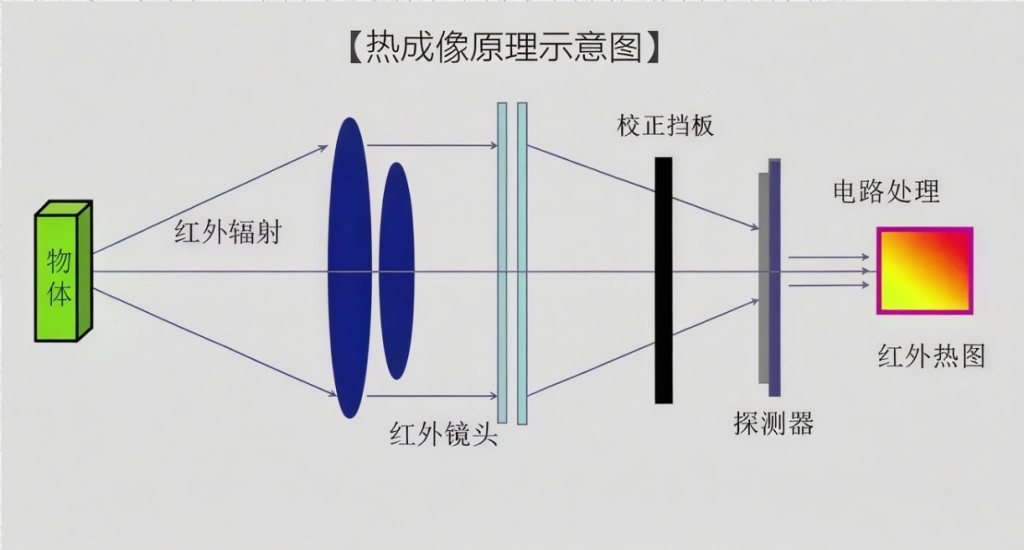
Any object with a temperature above absolute zero (0 K) radiates electromagnetic waves outward. When the temperature of an object is in the range common to natural environments, its radiant energy is concentrated in theThermal infrared band (~8-14 μm).
Thermal infrared thermal imaging cameras work, essentially:
Receive the radiant energy of the target surface in the thermal infrared band → convert it into an electrical signal → invert it into a bright surface temperature → present it in the form of a two-dimensional image.
As a result, it is not dependent on visible light conditions and can work stably at night, in low light or in shaded environments.
II. “One Pixel = One Temperature.”
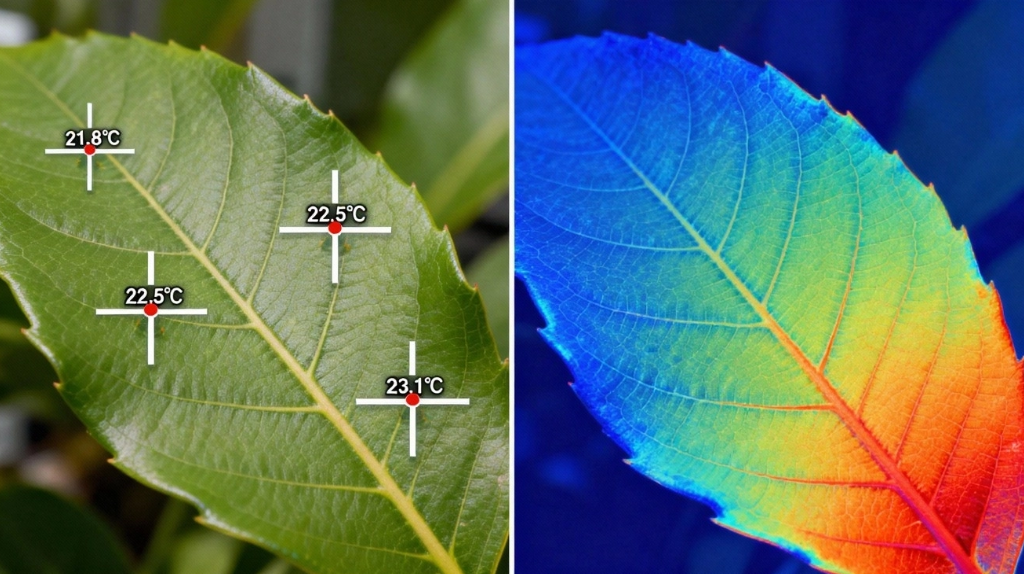
Unlike ordinary infrared spot temperature measurement, the detector of a thermal infrared imaging camera isTwo-dimensional arrays.
This means that the image of theEach pixel point, all of which correspond to a separate temperature inversion result; a thermal infrared image is, essentially, aTwo-dimensional temperature field.
This ability allows us to observe directly:
→ Temperature inhomogeneity within the canopy;
→ Temperature differences between vegetation types;
→ Thermal structure relationships between surface-vegetation-background.
This is information that traditional point measurement equipment cannot provide.
III. From “visible” to “analyzable”
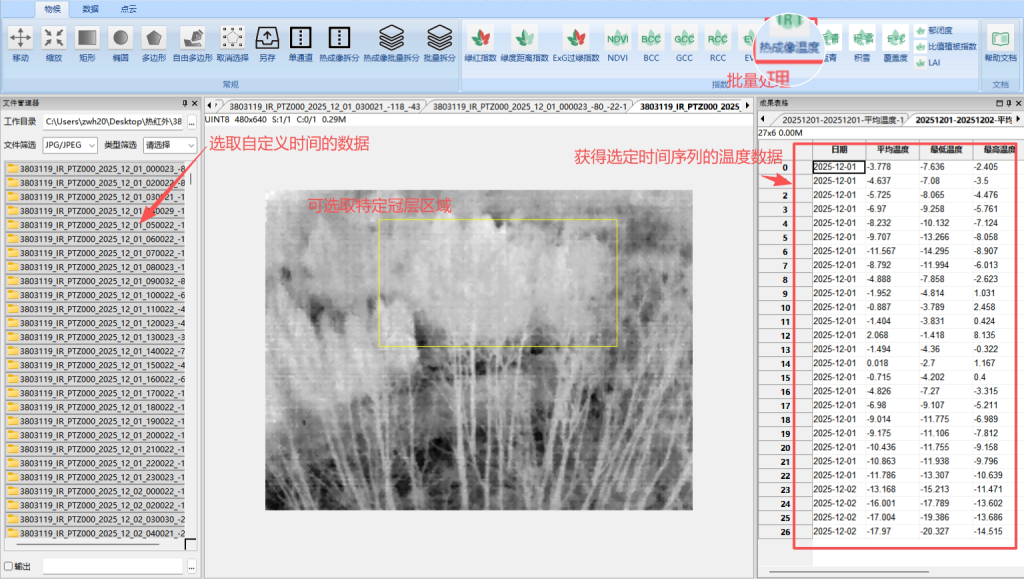
Hardware is a tool for acquiring data thatAnd data processing capabilities are key to transforming raw data into valuable information.
matching SmartViewer SoftwareSupport:
→On thermal infrared imagesCustomize region of interest.;
→The average temperature, extreme values, and thermal distribution are counted separately for different regions;
→Comparative time-series analysis of the same target;
→Image and numerical datasynchronizationExport for subsequent modeling or thesis use.
This upgrades the thermal infrared data from a visual display, to one with aUniform scale, cross validation and repeatable measurementsThe objective object of the
Examples of application scenarios
(1) Stationary deployment: long-term, continuous monitoring of the canopy thermal environment
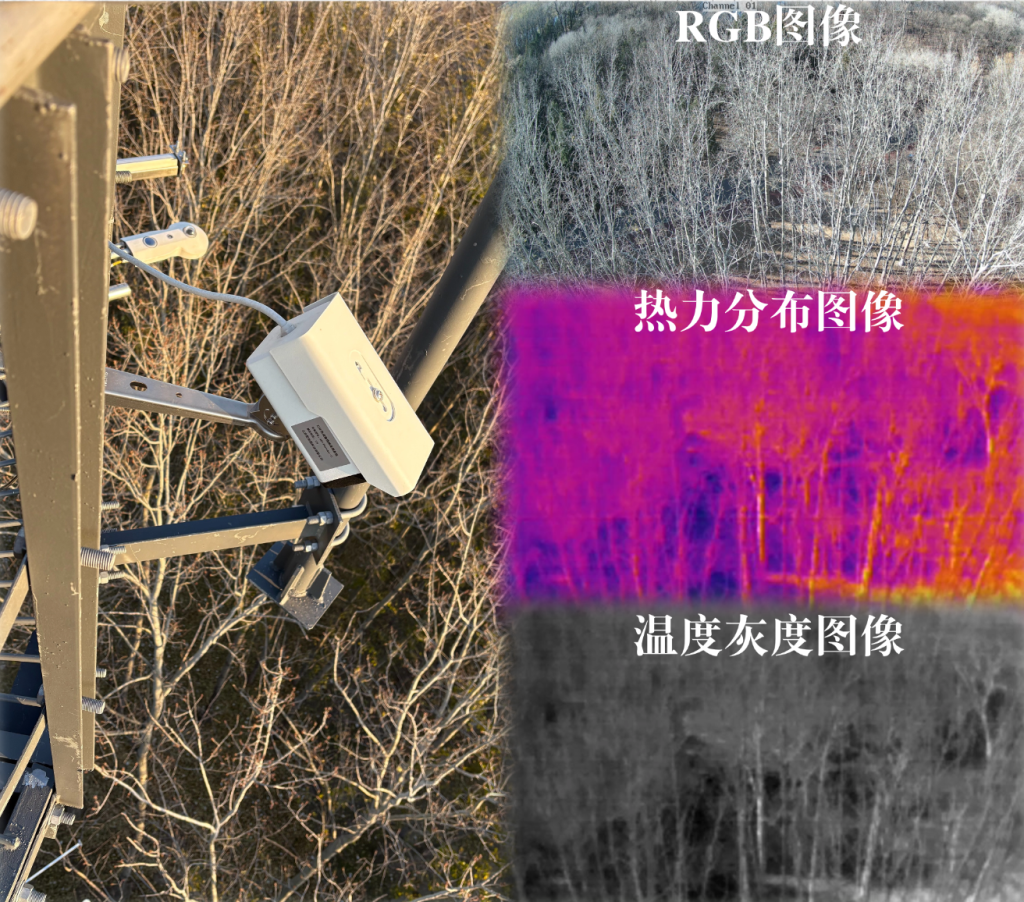
In the case of natural ecosystems such as forest parks, for example, the object of study often has aStructurally stable and slowly changing but with significant spatial heterogeneityThe characteristics of the
Deploying thermal infrared thermography cameras in a stationary manner allows for sample area-specificLong-term, continuous temperature observations.
In this mode, the advantages of thermal infrared imaging are mainly shown:
→ Continuous acquisition of two-dimensional temperature distributions in the same field of view;
→ Analyze temperature differences between different heights and regions of the canopy;
→ Identify changes in thermal response due to shading, gaps, and different vegetation structures.
This type of stationary monitoring is more suitable for researchingTemporal changes in the thermal environment of forest canopies.and the relationship between temperature changes and meteorological conditions and vegetation status.
(2) Railcar-mounted mode: automated temperature measurement of large areas on a regional scale
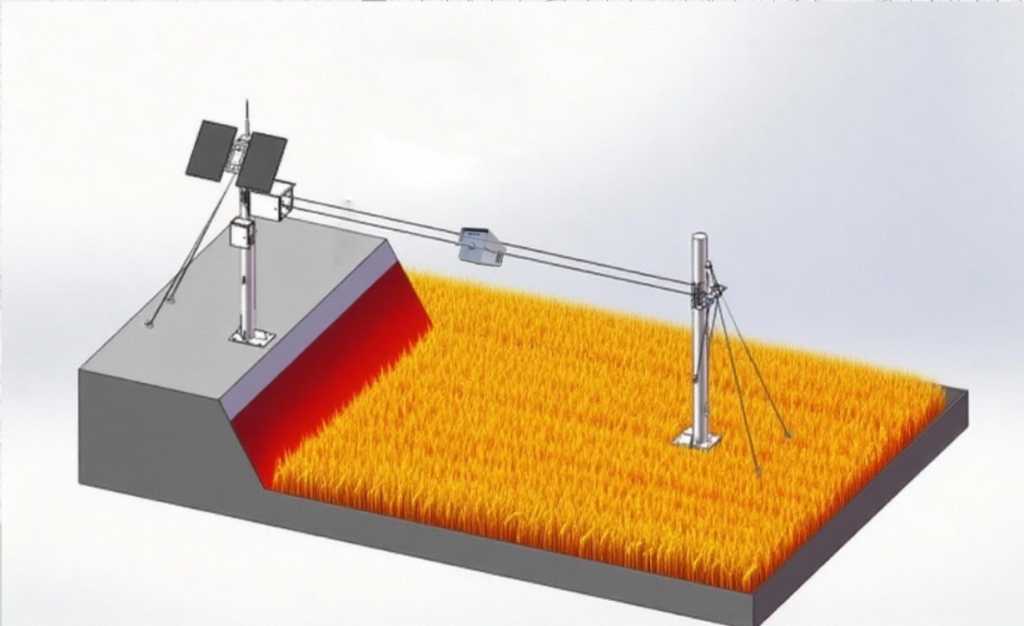
In scenarios where temperature information needs to be acquired over a larger spatial range, thermal infrared thermography cameras can also be mounted on railcar systems to realize theAutomated scanning observations along fixed paths.
By running the railcars back and forth, it is possible to run the railcars at a maximum length of about 200 metersThe thermal infrared images of different locations are acquired continuously within the orbit of the
Core features of the model include:
→ Continuous acquisition of temperature data at multiple locations under the same observation conditions;
→ Obtain a large-scale pattern of spatial variations in temperature rather than single-point or single-field-of-view results;
→ Applicable to sample zone surveys, forest edge-forest transition zones, functional zoning comparisons, and other studies.
The railcar model emphasizes more than stationary deploymentSpace coverage capacityIt provides an automated, high-frequency acquisition technique for regional-scale thermal environment analysis.
v. precision and applicability boundaries
Thermal infrared thermography is not a direct measurement of the true temperature, but an inversion of the surface brightness temperature based on the target's thermal radiation, and its accuracy is affected by a combination of factors.
In practice, the two most important types of influences are:
One is the difference in target surface emissivity.
Different vegetation or materials have different thermal infrared radiation characteristics, and systematic biases can easily be introduced if multiple types are mixed in the same observation. Engineering can reduce the effect of this factor by focusing on a single surface type in a single monitoring session and combining it with a radiance setting or calibration.
The second is environmental and equipment temperature changes.
Ambient temperature fluctuations and changes in the detector's own state can affect long-term or continuous observations. By deploying temperature sensors and correcting and calibrating the thermal infrared data at a later stage, the stability of the data can be significantly improved.
Therefore, in scientific practice, thermal infrared imaging is more suitable forRelative change analysis, spatial variation mapping and trend studiesand it is not appropriate to interpret a single absolute temperature value in isolation from the background conditions.
On the basis of clear physical prerequisites and applicable boundaries, thermal infrared thermography cameras can truly become a reliable research tool.
Comments are closed